
Trump was swiftly evacuated from the White House Correspondents' Dinner after a shooting incident near the venue.
The European Union has sanctioned three India-based companies for their alleged links with the Russian military as part of its efforts to put economic pressure on Russia for its invasion of Ukraine.

India has expressed strong concerns over attacks on commercial ships in the Strait of Hormuz, citing its importance to India's energy and economic security. Ambassador Yojna Patel highlighted the need to respect international law and ensure the safety of seafarers, while also addressing broader Middle East issues including the situation in Gaza and Lebanon.

The BSE Sensex plummeted 1,236 points, wiping out nearly Rs 7 lakh crore in investor wealth, driven by escalating tensions between the US and Iran and subsequent market selloff.

US President Donald Trump said on Wednesday that Washington is considering a "joint venture" with Iran to secure the Strait of Hormuz, following his announcement of a two-week ceasefire.

Secretary of State Marco Rubio urged its citizens to immediately depart from several Middle Eastern countries, citing "serious safety risks."

Former US President Donald Trump claimed he stopped a war between India and Pakistan and expressed his desire to be remembered as a great peacemaker.

Former Maldives President Mohamed Nasheed advocates for building democratic institutions over military intervention in resolving international conflicts, particularly in the context of the escalating West Asia crisis. He also discusses the impact of the conflict on the Maldives' tourism-dependent economy and calls for a stronger, more understanding India in the Indian Ocean Region.

'The next two to three weeks will not be decided in Washington.' 'They will be decided in Tehran, in whatever calculation Iran makes about the costs of continued resistance against the costs of appearing to have yielded.'
The Pakistani government has once again found itself embarrassed on the world stage, now acknowledging the impact of India's strategic and precision strikes on its military installation during the escalation in May, following Operation Sindoor, which came in retaliation for the April 22 Pahalgam terror attack that killed 26 civilians.
China's second-ranked general, He Weidong, is under investigation for corruption, along with nine other senior military officers punished for discipline violations and work-related crimes. This crackdown comes ahead of a key Communist Party conclave.

Iran has blamed the US for disruptions in oil and gas shipping through the Strait of Hormuz, citing 'destabilising actions' as the cause amid the ongoing West Asia conflict and rising energy prices.

Residents of Zehri tehsil in Khuzdar district have accused the Pakistani military of carrying out indiscriminate air and drone strikes that have killed civilians, including women and children, amid a siege that has continued for over a month.
Israeli PM Benjamin Netanyahu has affirmed that the United States and his administration have achieved nearly total dominance over Iranian airspace following a series of coordinated military strikes.

A new US intelligence report warns that India and Pakistan's relations remain at risk for nuclear conflict, fueled by terrorism and escalating tensions in the region.

A suicide car bomb attack on a police station in northwest Pakistan resulted in five deaths and thirteen injuries. The banned Tehreek-i-Taliban Pakistan (TTP) has denied responsibility, alleging the attack was orchestrated by state institutions.

US President Donald Trump's threats against Iran have drawn strong condemnation from Democrat leaders, who are calling for his removal from office, while some Republicans express concern.

'For India, the phase of pure restraint has passed.' 'Restraint has failed to reform Pakistan or rein in terrorism,' says Vivek Gumaste.

West Bengal Chief Minister Mamata Banerjee has criticised the deployment of CRPF armoured vehicles during the Assembly elections, accusing the BJP-led Centre of using government resources to favour their party. She also addressed concerns of potato farmers and urged them to sell their produce in other states.

For that to happen America does not have to lose. It only has to do the right thing, asserts Aakar Patel.

Two family members of Qassem Soleimani, the Iranian general killed in a US strike in 2020, have been arrested in the United States after their residency permits were rescinded.
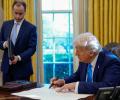
White House Press Secretary Karoline Leavitt noted that progress has been made in the Geneva talks with Iranian authorities, but the two nations stand 'far apart' on certain issues.

Delhi Police have arrested two men, including an aviation firm director and a dhaba owner, in connection with the assault on an Army brigadier and his son after the officer objected to them drinking alcohol in a car outside his residence.

The West Indies cricket team remains stranded in India due to international airspace restrictions following the US and Israeli strikes on Iran, causing frustration among players and officials.

Both sides have now revealed a preference for escalation over strategic defeat, and each new provocation narrows the space for the next pause. The Touska seizure, Iran's refusal to negotiate under blockade, Israel's strikes on Iranian oil infrastructure -- all of these add up to an increasingly untenable situation. This makes the wild card -- Trump and his motormouth -- more consequential than ever, notes Prem Panicker in his must read blog on the Iran War.

India observed the first anniversary of the Pahalgam terror attack, with leaders paying homage to the victims and asserting the country's commitment to fighting terrorism.

'No, India and China were not about to go to all-out war over a few rocks of Galwan.' 'The full picture of what went on at the highest level between two heads of State will not be known for a very, very long time and rightly so,' points out Colonel Anil A Athale, former head of the history division, ministry of defence.

Karex, the Malaysian company that makes roughly one in five of the world's condoms -- about five billion a year, supplying Durex and Trojan among others -- announced this week that it is raising prices by up to 30 percent. The reason is the Strait of Hormuz.

Pakistan's Foreign Office has refuted media reports suggesting that its efforts to facilitate peace talks between the US and Iran have stalled, calling the reports baseless and speculative.

US President Donald Trump announced on Friday that he has cancelled a previously expected second wave of military attacks on Venezuela, following his military action in Caracas which led to the capture of the South American country's leader Nicolas Maduro and his wife, citing improved cooperation from Caracas and the release of a large number of political prisoners as part of efforts to 'seek peace'.

Gold and silver prices saw a significant decline in the national capital, with silver falling by Rs 7,800 to Rs 2.43 lakh per kilogram and gold by Rs 1,500 to Rs 1.54 lakh per 10 grams, as investors booked profits amid persistent doubts over the durability of the West Asia ceasefire.

Democratic Progressive Azad Party chairman Ghulam Nabi Azad expressed deep concern over the escalating conflict in the Middle East, urging restraint and diplomacy from all parties involved.
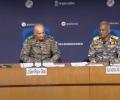
India's robust air defence system effectively thwarted Pakistani attempts to target Indian installations.

The Syria war resolution drafted by members of the powerful US Senate Foreign Relations Committee permits up to 60 days of military action against the Bashar al-Assad regime and does not permit any boots on the ground, Congressional aides said.

Addressing members of the Islamic Revolutionary Guard Corps, armed forces, and police, Trump said they must lay down their weapons and accept complete immunity or face 'certain death'.
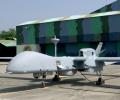
The Indian government is planning to develop an unmanned combat search and rescue aircraft for the Indian Air Force, designed to operate autonomously and in challenging terrains.

The United States, which entered this war in expectation of a short, sharp win along the Venezuela model, is now preparing for deeper involvement in a conflict it does not fully control, without the allies it typically relies on, against an adversary that is not behaving as expected, in a global environment that is already absorbing economic shock. Prem Panicker continues his must read daily blog on the Gulf War.

India has strongly advised its nationals to avoid travelling to Iran due to the deteriorating security situation and widespread anti-government protests.

Major General Amir Hatami, commander-in-chief of the Iranian Army, condemned the attack on the vessel, one of the country's newest warships, which occurred while it was returning from a military exercise.
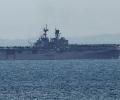
Although extensive air attacks have been carried out to destroy most of Iran's defence capabilities, the latter's resilience and sustenance during the war clearly indicate that the US landing force would encounter severe resistance in the operation, explains Commodore Venugopal Vengalil (retd).
